Getting coat closet dimensions wrong wastes space and creates daily frustration.
This guide covers everything you need. Standard sizes, depth requirements, small-space fixes, layout planning, and hardware tips. All in one place.
We have helped homeowners plan closets that actually work, not just look good on paper.
Your entryway deserves better than a cramped, overstuffed closet.
Here you will find the right numbers for your home and your life.
By the end, you will know exactly how to plan a coat closet that fits your space perfectly.
Understanding Coat Closet Dimensions for Smart Planning

Most people measure a coat closet once and call it done. That is where the problems start.
Coat closet dimensions cover three things: width, depth, and height. Each one affects how much you can store and how easy the closet is to use daily.
A closet that looks fine on paper can feel completely wrong once it is built. Getting these numbers right from the start saves you from rework, wasted money, and a closet that never quite works the way you need it to.
Standard Coat Closet Dimensions Explained

Knowing the standard sizes helps you plan a closet that works right from day one.
Standard Coat Closet Dimensions for Most Homes
The most common coat closet dimensions are 36 to 48 inches wide, 24 to 28 inches deep, and 84 inches tall.
A width of 36 inches fits a small family, while 48 to 60 inches works better for larger households. These are the numbers builders and designers use most often.
Typical Coat Closet Dimensions vs Modern Requirements
Older homes have closets only 18 to 20 inches deep, which no longer handles today's heavier outerwear.
Modern requirements recommend at least 24 inches of depth, with 28 to 30 inches being more comfortable. Width standards have also shifted from 30 inches to 36 to 48 inches.
Hallway Coat Closet Dimensions for Narrow Spaces
For narrow hallways, a coat closet 36 inches wide and 20 to 24 inches deep is the most realistic option.
Going deeper than 24 inches in a tight hallway makes the space feel closed in. Sliding doors are the smart choice since they do not swing into the path.
Ideal Depth and Size in Coat Closet Dimensions
Depth is the most important number in a coat closet. Getting it right makes everything else easier.
Standard Depth in Coat Closet Dimensions (24 to 30 Inches)

The standard depth for a coat closet is 24 inches, which handles most regular coats without them pressing against the back wall.
For heavier outerwear, 28 to 30 inches makes a real difference. Going below 20 inches makes a coat closet nearly impossible to use well.
Depth Coat Closet Dimensions for Bulky Winter Coats

Heavy parkas and padded coats need at least 28 to 30 inches of depth to hang freely. At 30 inches, sleeves do not bunch and zippers stay protected.
If you live in a cold climate, plan for this depth from the start.
Minimum Coat Closet Dimensions for Small Homes

The minimum workable dimensions are 30 inches wide, 20 inches deep, and 80 inches tall. At these measurements the closet handles 4 to 5 coats and a small shelf.
Going below these numbers makes the space too cramped to use comfortably.
Adjusting Coat Closet Dimensions for Limited Spaces

When space is limited, protect the depth for coats and use taller shelving to compensate for limited width. Wall-mounted hooks just outside the closet can offload extra storage.
A slim bench with storage underneath near the entry replaces floor bins inside the closet.
Coat Closet Dimensions Layout Planning Guide
Smart layout planning turns even a basic-sized closet into storage that actually works.
Single Rod vs Double Rod Layout Setup

A single rod works well for long coats and should sit at 60 to 66 inches from the floor. A double rod setup nearly doubles hanging capacity, with rods at 80 to 84 inches and 40 to 42 inches.
For most coat closets, a single rod with a shelf above is the most practical choice.
Vertical Zoning for Maximum Storage Efficiency

Vertical zoning divides the closet into three sections:top zone above 72 inches for seasonal items, middle zone for hanging coats, and lower zone below 42 inches for shoes and bins.
Using all three zones makes the closet far more efficient. Most people only use one zone and waste the rest.
Floor Storage Planning for Shoes and Bins

Allow at least 12 to 16 inches of floor space below the rod for shoes, and 14 to 18 inches if boots are included. A built-in shoe rack keeps the floor tidy and prevents the usual pile-up.
Flat bins on the floor work well for scarves, gloves, and small everyday items.
Hardware Considerations in Coat Closet Dimensions

The right hardware makes a coat closet easier to use and more efficient over time.
Closet Rod Height and Positioning Guidelines
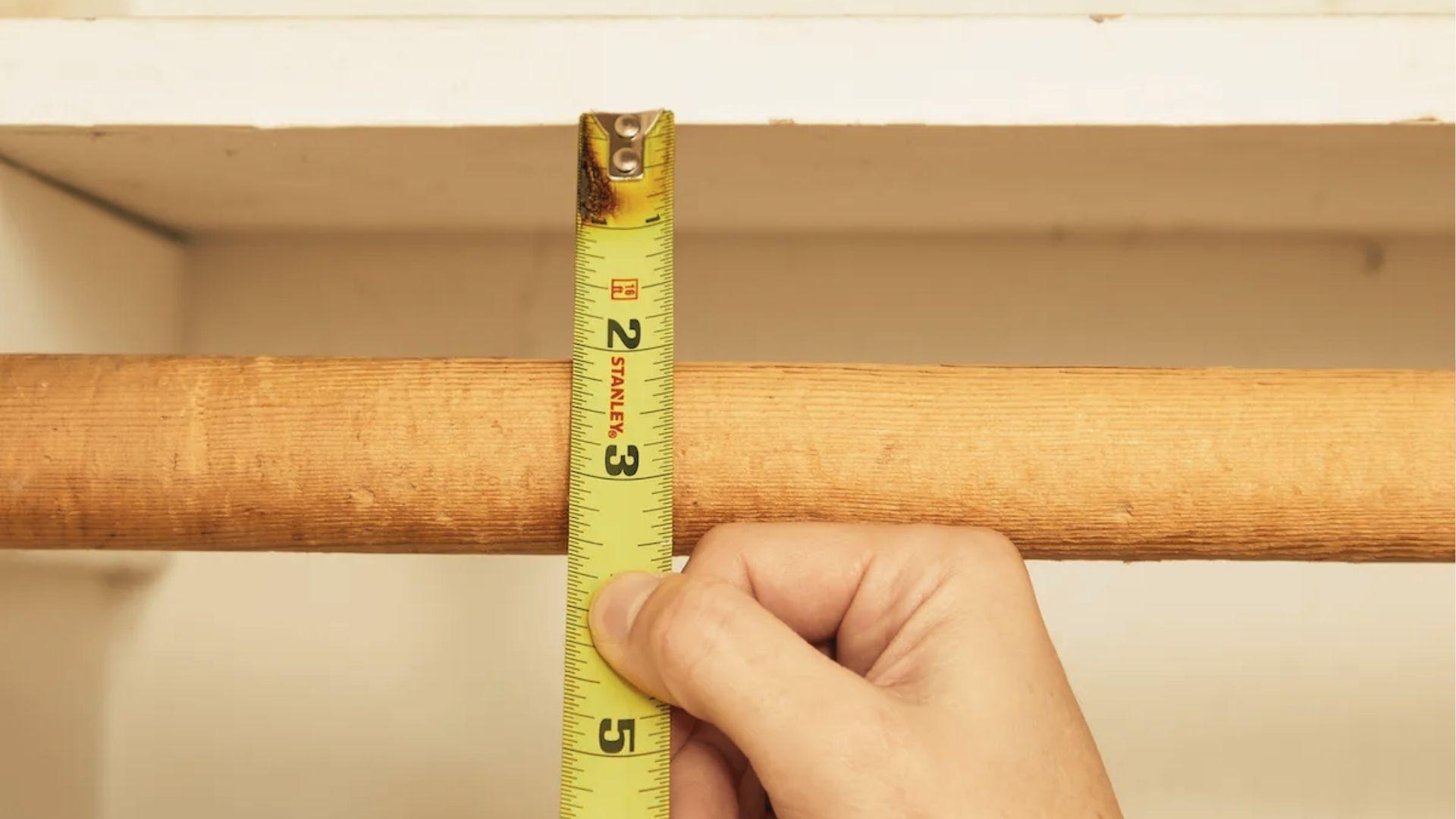
For full-length coats, the rod should sit at 60 to 66 inches from the floor. The rod needs to be at least 10 to 12 inches from the back wall so hangers turn freely.
Getting this position right prevents coats from pressing against the wall.
Sliding Doors vs Hinged Doors (Space Efficiency Impact)
Hinged doors give full access but require swing clearance in front. Sliding doors need no clearance but only allow access to half the closet at a time.
Bifold doors offer a middle ground with less clearance needed and near-full access.
Hooks, Valet Rods, and Space-Saving Accessories
Hooks on the inside of the door handle bags, umbrellas, and light jackets without using rod space. A valet rod is a pull-out option useful for temporary hanging.
Slim velvet hangers and tiered shelving inserts also make better use of the space you already have.
Hardware Clearance and Installation Depth Issues
Rod brackets need at least 1.5 inches of space from the wall and shelving brackets need secure studs to hold weight.
A closet listed as 24 inches deep may actually measure 22 inches once the frame is accounted for. Always measure the actual installation depth before buying any hardware.
Expert Tips for Perfect Coat Closet Dimensions
A few smart choices now can make your coat closet more useful for years to come.
- Always measure the actual wall depth, not just the listed closet size, before buying hardware
- Use adjustable shelving so the layout can change as your storage needs shift
- Choose sliding or bifold doors in tight entryways to save swing clearance space
- Keep only current-season coats inside and move off-season items to another storage spot
- Plan floor space intentionally for shoes and bins before the closet is built or organized
Conclusion
Planning coat closet dimensions might seem like a small detail, but it shapes how your home feels every single day.
I once saw a closet rebuilt twice just because the depth was off by 4 inches. Getting it right the first time saves time, money, and frustration.
Now you have everything you need to plan with confidence. Start with your measurements, think about how your household uses the space, and build from there.
Found this helpful? Share it with someone planning their home or drop a comment below with your closet size.
Frequently Asked Questions
What is the standard depth for a coat closet?
The standard depth for a coat closet is 24 inches, which fits most regular coats comfortably. For bulky winter outerwear, 28 to 30 inches works better.
What are minimum coat closet dimensions?
The minimum workable dimensions are 30 inches wide, 20 inches deep, and 80 inches tall. These measurements are tight but functional for a small household.
How wide should an entry coat closet be?
An entryway coat closet should be at least 36 inches wide for a small household. For families or high-traffic areas, 48 to 60 inches is more practical.
What is the best layout for a small coat closet?
A single rod at 60 inches high, one shelf above, and a shoe rack on the floor works best. Add hooks to the inside of the door to free up rod space.
Can I add a second rod in my coat closet?
Yes, if your closet is at least 24 inches deep and you are hanging shorter jackets. Place the upper rod at 80 inches and the lower rod at 40 inches for the best result.